
The people of Syria have been living in a perpetual state of emergency since a crisis erupted in 2011. Nearly half a million people have been killed and 7.4 million have taken refuge in neighbouring countries.
In 2023 Islamic Relief provided life-saving aid and ongoing support to more than 1.7 million people in need inside Syria as well as Syrian refugees struggling to rebuild their lives in neighbouring Lebanon, Jordan, and Türkiye. Our support was needed more than ever within Syria in particular, as rampant inflation pushed food and fuel prices to record highs, deepening poverty and contributing to unprecedented rates of malnutrition.
Seven out of 10 Syrians needed humanitarian aid in 2023 – 15.3 million of the country’s 22.1 million people. This is a five per cent increase on 2022 and represents an extra three-quarters of a million people requiring support. This extra demand came in a year when the international community provided only a third of the $5.4 million (approx. £4.2 million) requested by the UN to fund its Humanitarian Response Plan for Syria.
Supporting vulnerable people in Syria’s northwest
In 2023, Islamic Relief’s efforts continued to focus on hard-to-reach areas of northwestern Syria where levels of poverty and hunger are highest. Here, people’s suffering was further exacerbated by February’s devastating earthquakes, storms and floods in March, extreme heat and wildfires in the summer months, and an escalation in conflict in October. The escalation was the worst this region of Syria had seen since 2019, displacing 120,000 people and damaging or destroying 43 health facilities, 27 schools and 20 water systems.
While the urgently needed response to the earthquakes dominated Islamic Relief’s activities in Syria this year, we also continued to provide food for displaced people, along with water and shelter materials. Our food projects, including seasonal Ramadan and qurbani food distributions, helped more than 700,000 Syrians stay nourished in 2023, while over 1,400 orphaned children received support through our Orphan Sponsorship Programme.
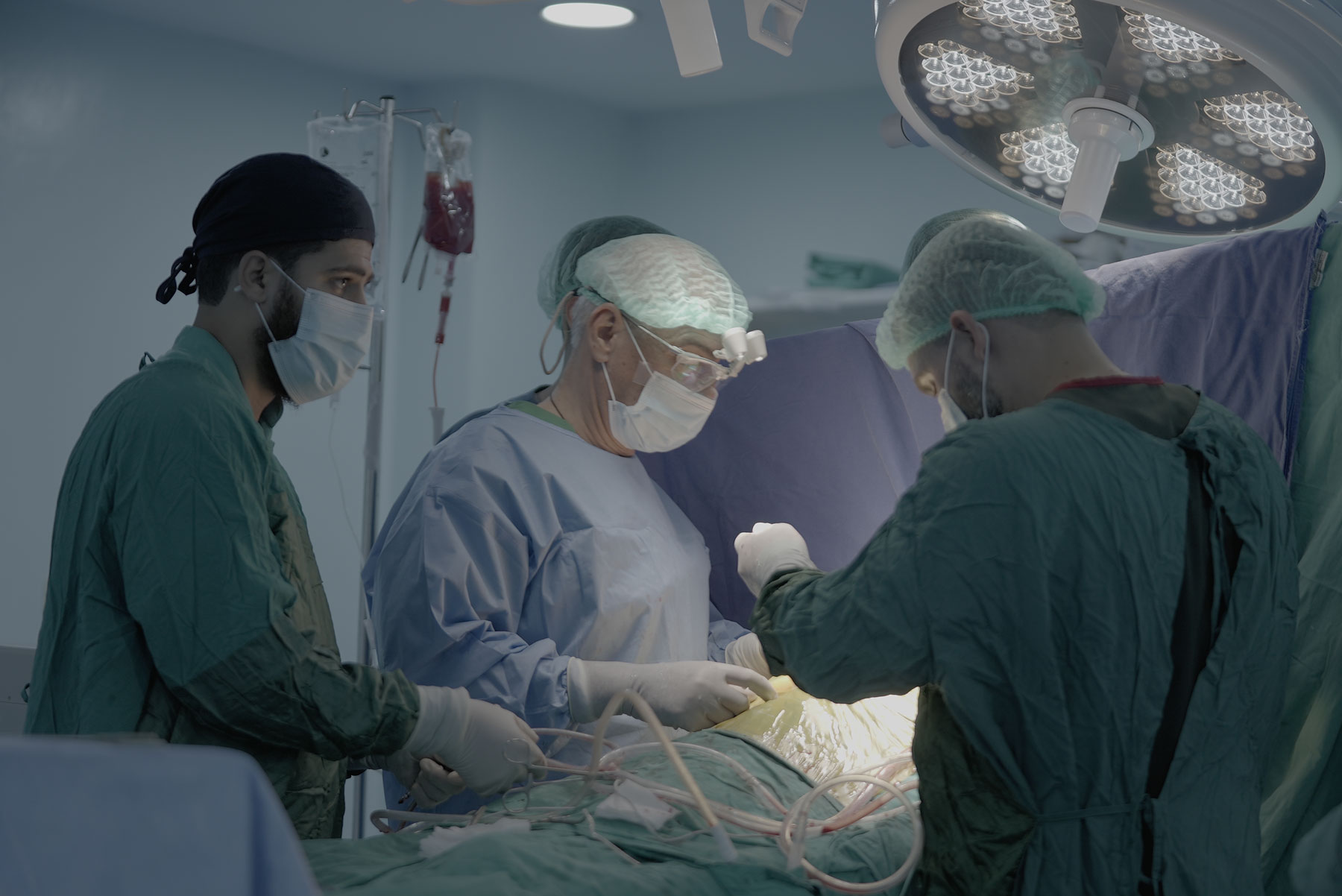
Islamic Relief worked to build 59 new permanent shelters for poor internally displaced people living in tents. Each new home had two rooms, plus a kitchen and toilet. We continued to invest in livelihoods programmes to help displaced families earn a living again and provided extensive support to health and education facilities devastated by years of conflict and economic collapse. This included providing stipends to more than 400 teachers and treating 500,000 patients, including 20 who received otherwise costly open-heart surgeries for free.
We will continue to stand with the people of Syria as they rebuild their lives and livelihoods amid crisis and displacement. 2023 saw the devastating failure to reauthorise the Syria cross-border aid mechanism, which effectively shut down a nine-year-old system for delivering humanitarian aid to parts of Syria not controlled by the country’s government. This failure had real impacts on the ability of humanitarian organisations, like Islamic Relief, to support vulnerable people in northwestern Syria. We continue to call for the mechanism to be reinstated, so that aid can reach those most in need.
RS372688_RS362834_SIDA—(539)
Surgeons operate at a health centre funded by Islamic Relief – the only facility providing heart surgery in northwestern Syria