
Islamic Relief works to ensure our projects reflect a Triple Nexus approach, integrating humanitarian, development and social cohesion efforts to address complex and protracted crises. This approach is designed to more effectively meets the needs of the communities we serve.
Reducing social tensions and improving livelihoods in Mali
Persistent tensions between various groups in northern and central Mali have greatly affected communities in the Gourma Rharous circle. The area is home to many vulnerable families experiencing displacement and significant challenges to earning a living. Many families rely on livestock farming but are grappling with increasingly limited water resources, and poor access to banking services. The tensions have led to mistrust between and within communities due to fear of association with armed groups.
Islamic Relief’s West Africa Regional Community Resilience Building project aims to address some of the major issues facing communities in Gossi and Douentza communes. The ongoing project is:
Improving access to water
We built four solar water pumping systems to provide drinking water and stations for livestock watering. The water points have also made it possible for families to set up small-scale market gardens, adding to their income. Management committees were also established to ensure the long-term future of the water points. Committee members received training to maintain the points and promote hygiene related to their use.
Supporting people to live together happily
The project oversaw the establishment of inclusive community conflict resolution organisations (CHATs) to work to resolve conflicts between and within communities. As of September 2023, more than 500 people, including 318 women, had participated.
That same month, several awareness-raising sessions were held in Douentza, focusing on promoting dialogue and encouraging people to spread messages of peace in their communities. In Douentza, CHAT members also worked to resolve family disputes, enlisting community and faith leaders to mediate. These efforts resulted in 14 couples reconciling.
Climate change is reducing the availability of grazing land in Douentza and Gossi, sometimes leading to conflict between farmers as they move in search of suitable land. Islamic Relief provided information on the Pastoral Charter Law (2001) so farmers gained a better understanding of the issues and challenges involved in managing resources to minimise conflicts. We also provided cash-for-work opportunities to community members to regenerate eight hectares of land per village, some of which have already harvested fodder from it.
Empowering entrepreneurs
Two thousand women received technical and business training to help them set up, manage and grow small businesses, such as trading and tailoring. The project is now in the process of building a vast system to finance 60 village savings and loans associations (VSLAs) among the communities targeted. Members of the VSLAs number 30-35 per association and have been trained in Islamic microfinance to set up and grow their small businesses.
The VSLAs have already helped to improve the women’s ability to organise and work together. The loans will be used to set up small businesses, empowering more than 2,000 women to contribute to their families’ income and the local economy through businesses that are more resilient to climatic shocks.
Building resilience to climate change
Islamic Relief set up six disaster risk reduction (DRR) committees across villages in the project’s two communes. The committees, made up of men, women, boys and girls, and including persons with disabilities, mapped and discussed the strengths and weaknesses of existing DRR initiatives.
“We no longer drink water which is not fit for human consumption from caves and wells. We now have drinking water close to the village.
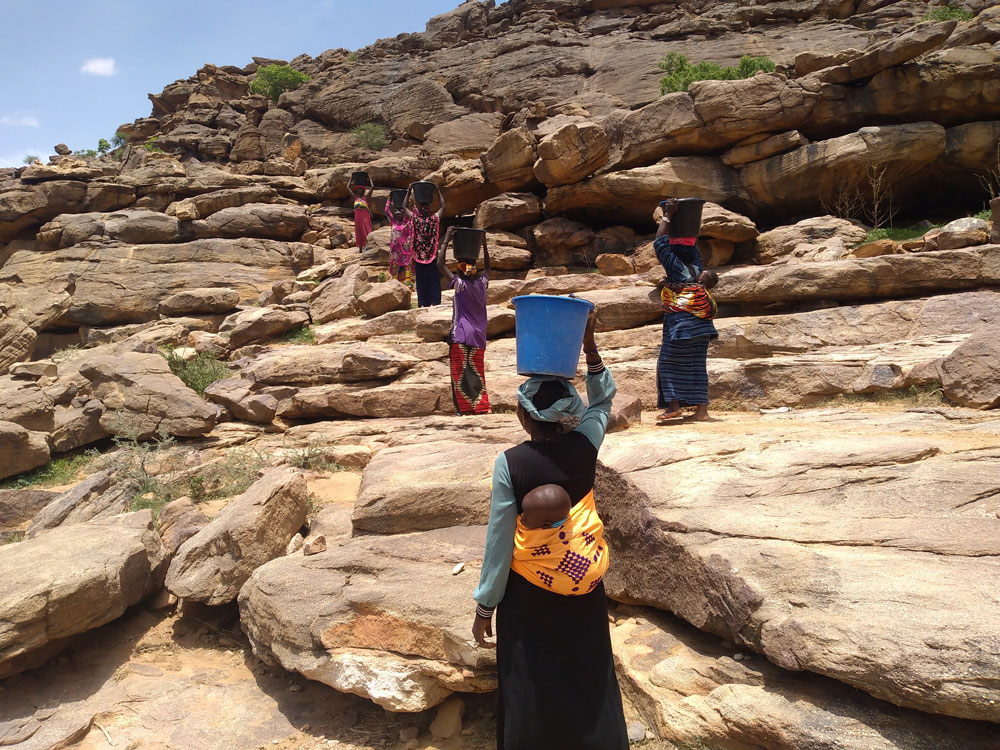
“Constructing an animal drinking trough next to the water point means we are now able to water all the animals in the village without difficulties,” says Halimatou from Eweri village, who previously had to make long and time-consuming trips to collect drinking water and water her animals. These journeys left her fearful for her safety, as well as that of her animals.
THE IMPACT SO FAR
A mid-term review revealed the project had already achieved significant results, including:
- 300 women gained access to market gardens and training in vegetable production
- Four boreholes constructed, providing water for drinking, gardening and livestock to an average of 3,000 people per day
- 100 per cent of respondents aware of how to make complaints and offer feedback on project
‘This project has had a positive impact on my family’
“Today, I’m doing better and better, thanks to the savings and loan activities carried out by our association. Through our fund, I was able to benefit from an interest-free loan that enabled me to increase my stock of goods.
“Our village has also benefited from a market garden with a solar pumping system and standpipes for the supply of drinking water.
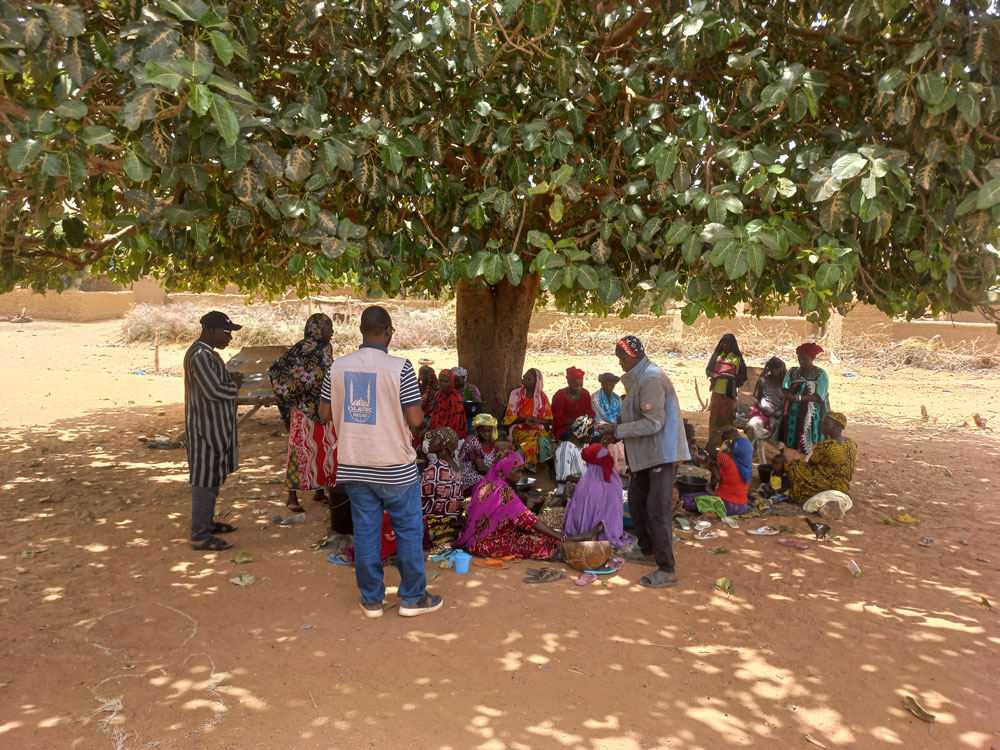
This has been very beneficial for us, as market gardening is one of our main activities. Several training courses were organised by Islamic Relief and thanks to these, my vegetable production will be boosted because I now know how to make a nursery, seed in rows and transplant. We’re now better equipped in the agricultural field and we’re certain that our farm yields will improve this year.
“The project has had a positive impact on my family. Thanks to the profits I’ve made, I can now pay my husband’s medical expenses.”
Aissata, secretary of the Gossi Women’s Savings and Loan Association and mother of six