
Localisation is increasingly crucial in the design of Islamic Relief’s programmes and emergency response plans.
Through various avenues, including our landmark multi-year, multi-country Strengthening Response Capacity and Institutional Development for Excellence (STRIDE) project, we are joining hands with local organisations to reach more people in need worldwide and ensure we are delivering the support they need.
What is localisation?
Localisation is the process of empowering local NGOs and other responders in countries affected by disaster and crisis to take a leading role in delivering humanitarian aid.
Why is it important?
Local actors are often better positioned to respond to crises as they understand the local context, language and cultural dynamics better than international humanitarian organisations. They can also reach affected communities much more quickly as they are already on the ground. In the long term, strengthening the capacity of local actors through training and funding will reduce dependence on international aid.
For Islamic Relief, localisation also aligns with our commitments to global initiatives including the Grand Bargain 2.0 and Charter for Change, which promote localisation as a means of creating an equitable and effective humanitarian system.
How does Islamic Relief promote localisation?
The STRIDE project is our most extensive and dedicated investment in localisation. Through STRIDE, we identify local organisations in countries where we operate – as well as in countries where we don’t – that might benefit from training, funding and technical support.
In countries where we have a presence, for example an Islamic Relief country office, we work closely with local partners to maximise our impact and address specific community needs.
How does it work in countries where Islamic Relief doesn’t have a presence?
Islamic Relief has a presence in more than 40 countries but there are many more countries where people have significant humanitarian needs.
We identify countries vulnerable to crises such as natural disasters or conflict and invite applications from local organisations to partner with us. In 2023, we continued our work with local partners in Nigeria, Cambodia and the Democratic Republic of Congo, supporting more than 1,500 people in need.
This approach empowers both our country offices and local partners to be better prepared for the next emergency, while allowing Islamic Relief to foster stronger connections with other charities, helping up to work together for a better world.
The Grand Bargain 2.0
This rigorous global framework to enhance humanitarian effectiveness has three main objectives:
- Enhancing humanitarian aid: Reducing duplication, streamlining processes, and improving coordination to ensure timely, effective assistance.
- Strengthening local leadership: Empowering local and national responders to lead, and enhance capacity in, humanitarian operations.
- Enhancing humanitarian financing: Streamlining reporting to reduce earmarking and simplify processes for flexible and predictable funding, fostering transparency and accountability.
Islamic Relief has been a proud signatory of the Grand Bargain 2.0 since October 2022.
Charter for Change
Signatories pledge to implement eight commitments to address imbalances and inequality in the global humanitarian system. These are:
- Direct funding – Commit to pass 25 per cent of humanitarian funding to national NGOs
- Partnership – Reaffirm principles of partnership
- Transparency – Publish the amount or percentage of funding that is passed on to national NGOs
- Recruitment – Address and prevent the negative impact of recruiting national NGO staff during emergencies
- Advocacy – Emphasise the importance of national actors to humanitarian donors
- Equality – Address sub-contracting and ensure equality in decision making
- Support – Provide robust organisational support and capacity building
- Promotion – Promote the role of local actors to media and public
Harnessing the knowledge of expert trainers
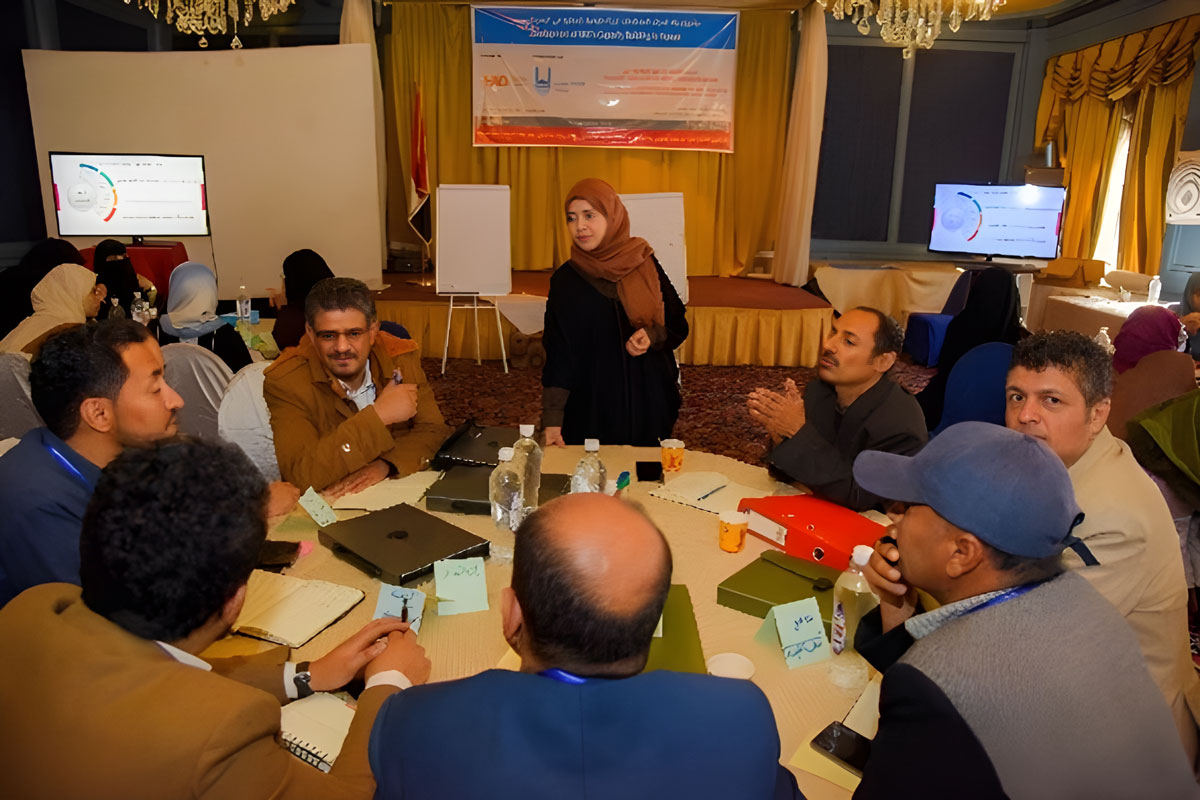
The STRIDE project frequently collaborates with the Humanitarian Academy for Development (HAD) – Islamic Relief’s learning arm – to offer high-quality training to humanitarians around the world.
In 2023, HAD delivered eight trainings to local partners in the Democratic Republic of Congo, Nigeria, the Philippines and Cambodia to support humanitarians in developing and strengthening their skills and knowledge in leadership and financial sustainability.
Separately, HAD ran a comprehensive training programme to boost the skills of 20 local NGOs in Yemen, conducting 17 training sessions that reached over 390 participants. The sessions covered topics including project and financial management and building partnerships. In 2023, HAD also brought its extremely popular Management Development Programme to Yemen to help aid workers develop the skills to navigate challenges in their roles.
HAD ended the year with a second round of free face-to-face courses for organisations working with deprived communities in Manchester and Glasgow. Working with Islamic Relief UK, HAD provided courses on topics including finance and safeguarding.
In partnership with Islamic Relief UK, HAD delivered training courses for community groups and faith institutions in London, Glasgow, Birmingham and Manchester. The topics covered in the courses ranged from safeguarding to governance.
Localisation in theory and practice
2023 was a year of groundbreaking progress for the STRIDE project. Through it, we witnessed local heroes rise, partnerships flourish and vulnerable communities find a stronger voice. As the STRIDE II phase drew to a close, we saw 20 Islamic Relief country offices and six local organisations complete their capacity-strengthening trajectories. A major research paper on climate adaptation and localisation was published and work began on research into the role of faith actors in localisation was also published through the project.
STRIDE joined forces with local partners in Cambodia and Nigeria, carrying out successful training and knowledge sharing sessions in both countries for local humanitarians. In Iraq, we supported the growing humanitarian community in the Kurdistan region, with 25 local NGOs taking part in our Professional Empowerment of Local Organizations training programme. This included a radio show hosted by Islamic Relief on the importance of localisation. The show featured a representative from the Kurdistan Regional Government’s NGO directorate and reached thousands of listeners.
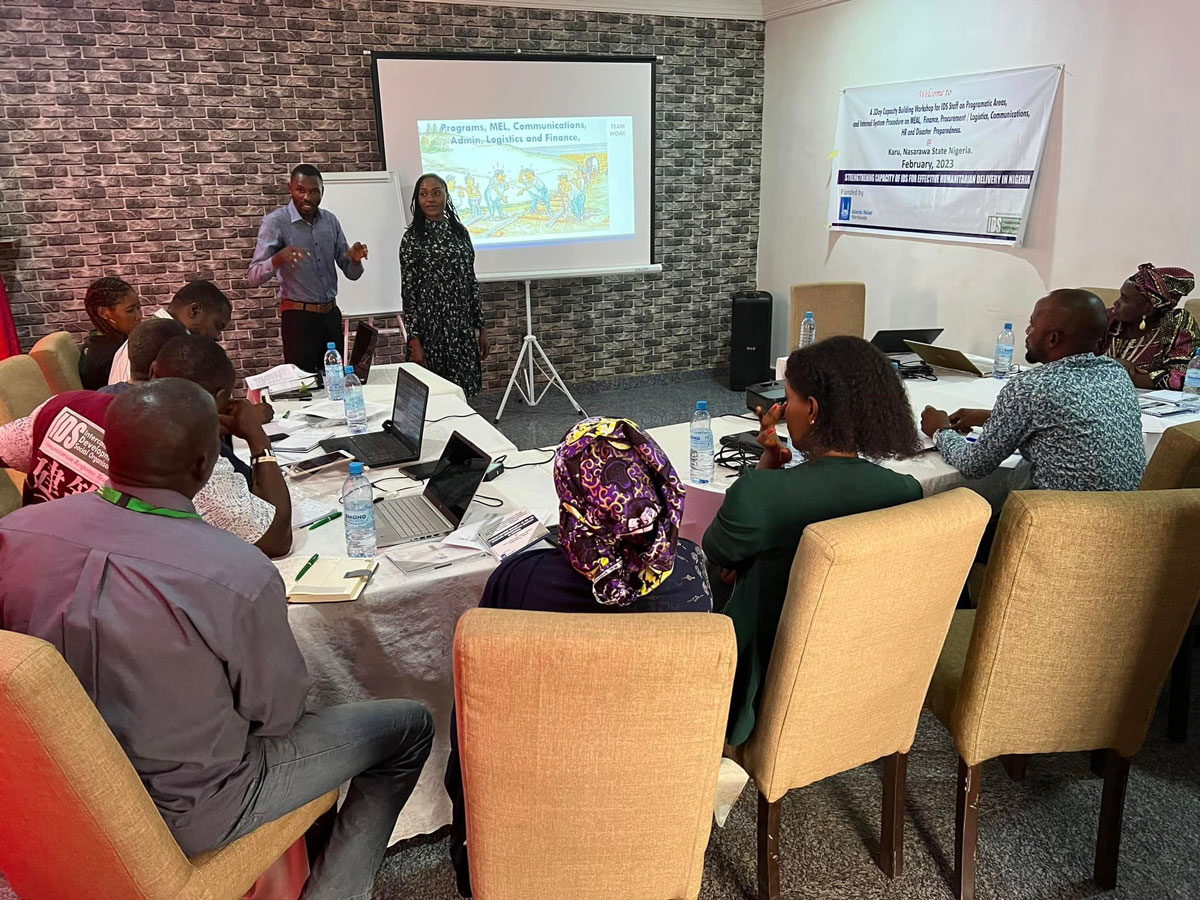
Capacity-strengthening-workshop-of-IDS-staff—Nigeria-2023-(3)
Humanitarians in Nigeria take part in training covering advocacy, financial management and mentorship, among other topics, in February