
The years since the Taliban’s return to power have seen Afghanistan’s already-declining economy almost completely collapse. Almost 23 million Afghans – more than half the population – are suffering critical food and cash shortages, unsure of where their next meal is coming from.
In 2023, Afghanistan was hit with another crisis, when four 6.3-magnitude earthquakes struck Herat Province in quick succession. The October quakes killed more than 2,000 people and left thousands of families homeless, exposed to the elements as temperatures began to cool. What followed was one of Afghanistan’s coldest winters on record, with temperatures plummeting as low as -33C in some mountainous areas.
Along with the loss of life, the earthquakes also destroyed and damaged schools, healthcare facilities and water networks. In the days following the disaster, powerful dust storms complicated aid delivery and forced some already-displaced people to relocate once more.
A rapid response to meet immediate needs
Islamic Relief worked to support vulnerable Afghans through the multiple crises they continued to face in 2023.
We were among the first responders on the ground following the first earthquake in Herat, deploying 11 mobile health teams to treat the injured, provide nutritional support and offer counselling, supporting over 10,000 patients in the immediate aftermath of the disaster.
To help families meet their most desperate needs, we distributed cash to more than 12,900 people and provided temporary shelters to those suddenly made homeless by the disaster.
We also worked to deliver clean drinking water to several affected villages, installing 18 emergency water tanks that delivered more than 76,000 litres of water. Islamic Relief also constructed 100 emergency latrines in two districts to improve sanitation and reduce the risk of disease.
In the months that followed, we focused on providing clean drinking water to several affected villages, installing 18 1,000-litre water tanks and facilitating water trucking, which delivered over 76,000 litres to people in need. We also constructed emergency latrines in two districts, which helped more than 1,900 people stay clean and well, and continued to distribute essential items such as kitchen utensils and hygiene and dignity kits.
During the especially cold winter, Islamic Relief’s annual winterisation programme supported more than 62,100 people in Afghanistan, distributing blankets, fuel and winter clothes to help keep people warm.
As the economic and hunger crises continue to stretch on, our response has shifted from solely providing emergency food, water and cash, to long-term development programming. Some examples of this work include empowering men and women to start and grow their own small businesses through training and grants, and running cash-for-work programmes to rehabilitate water networks. The latter not only provides paid work opportunities, but also supports farmers reached by the repaired networks to grow more food.
In 2023, we continued to campaign for the unrestricted, prompt, secure and unimpeded access for all humanitarian personnel, including women, working in Afghanistan. We called for girls’ and women’s right to safely access education beyond primary school, and to participate in public life and decision-making to be respected. Islamic Relief also urged the international community, donors and Afghan authorities to consider the potential impact of climate change on natural disasters in order to build robust response plans.
Umair Hasan
Country Director, Islamic Relief Afghanistan
“Our teams see survivors coming to them in such a state of shock they can barely speak. They have been traumatised by a week which has seen four earthquakes flatten entire communities and wipe out generations of families. People were really suffering after the first earthquake, but more earthquakes and then a devastating sandstorm have taken a huge toll on their mental health. People don’t feel safe, and they are too afraid to go indoors. They’ve seen loved ones and neighbours die under the rubble. People will need long-term support to recover from this unprecedented disaster.”
Supporting survivors’ mental and physical wellbeing
Sharifa, 25, Zinda Jan district, Herat province
Sharifa was pregnant when the earthquake struck, and lost one of her children in the disaster. Afterwards, her mental state suffered massively and only got worse when the sandstorm arrived.
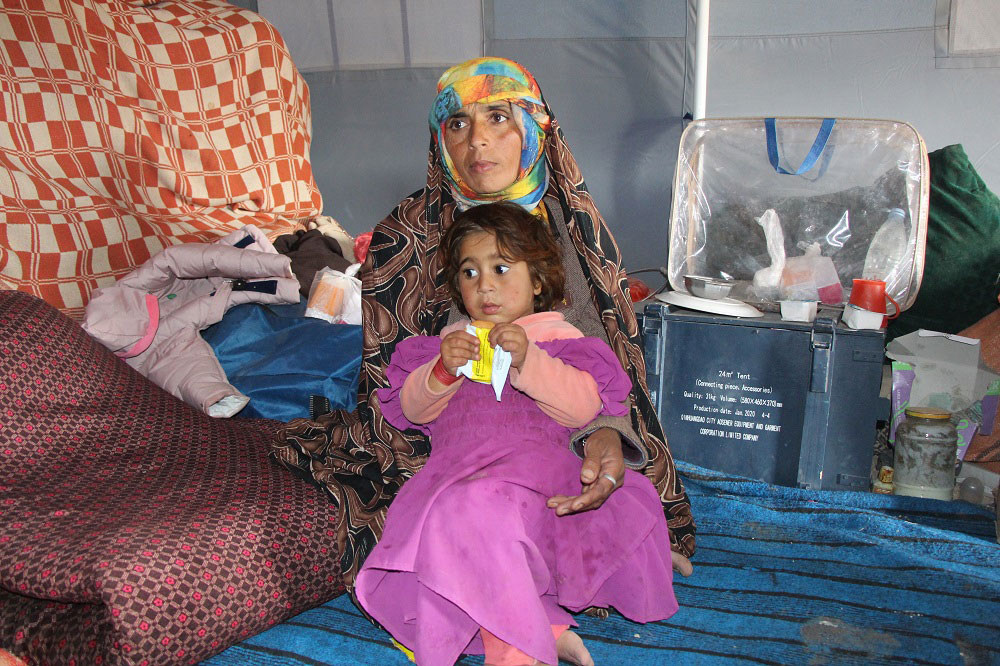
“My child was about to be born in the middle of the night and there was no health service in our district. Islamic Relief helped me. It was the first responder providing shelters and healthcare.”
Sharifa and her three children are living in a tent for now, and with Islamic Relief’s support, her newborn is in great health.
Jawaher, 65, Qala Nawak village, Zinda Jan, Herat province
“They pulled me out from under the ruins of my house. I couldn’t recognise anything, and I really didn’t know what was going on,” says Jawaher, who lost six sons and one daughter in the earthquake.
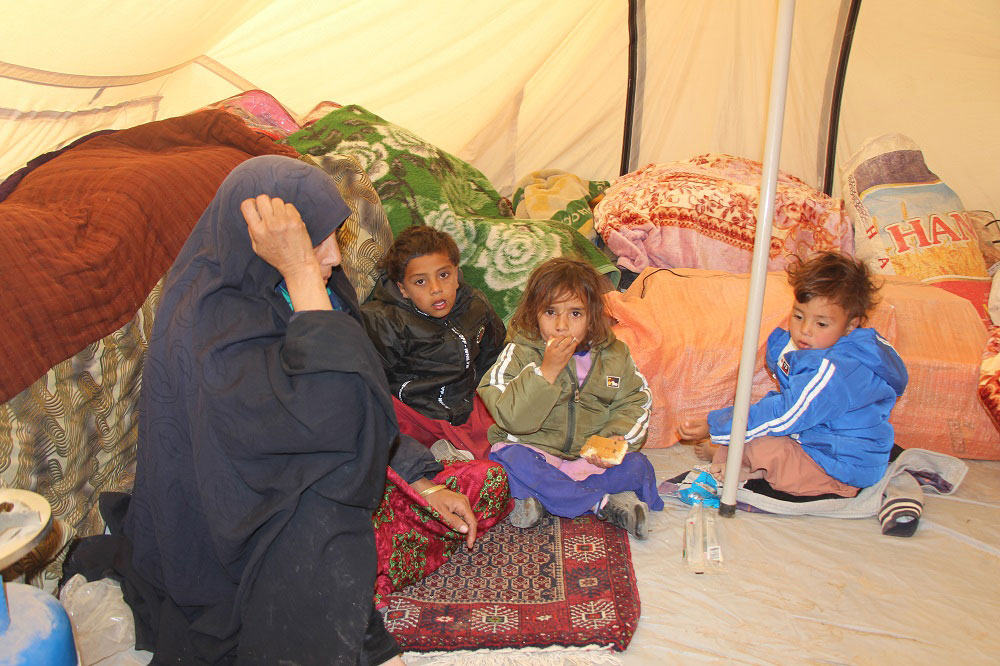
Now living with her five surviving children in a tent, Jawaher’s mental health is deteriorating.
“I don’t have money to buy food or clothes for my children. I can’t afford medicine for myself. I really thank Islamic Relief for helping us a lot. But we really need more support.
“Winter is coming and we don’t have a home to live in. These tents are not strong enough to withstand the cold winter weather.”
Islamic Relief is providing Jawaher with counselling to help her cope with the traumatic events she’s lived through.
Najiba, 30, Qala Nawak village, Zinda Jan, Herat province
The earthquake changed Najiba’s life in an instant. From a married mother of six, she became a widow with four living children after her husband and sons, 15 and 17, were killed in the disaster.
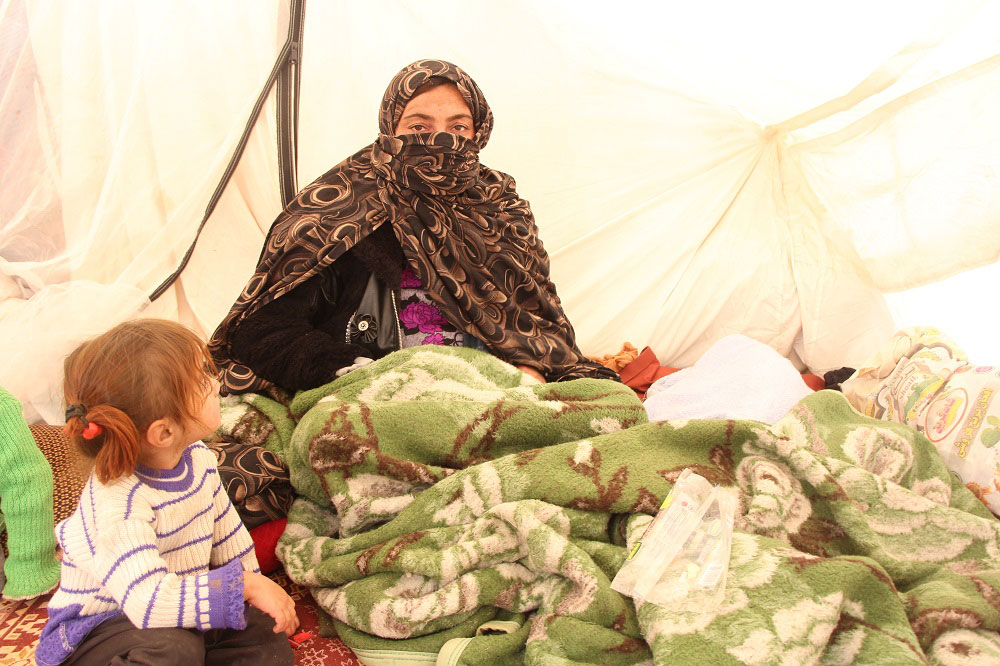
“I have nothing now. I lost everything in the earthquake. I lost three members of my family and my mental state is not good,” Najiba says, struggling for breath and shaking at the memory.
She is now living in a tent with her four daughters and receiving cash from Islamic Relief, which helps her support her family.
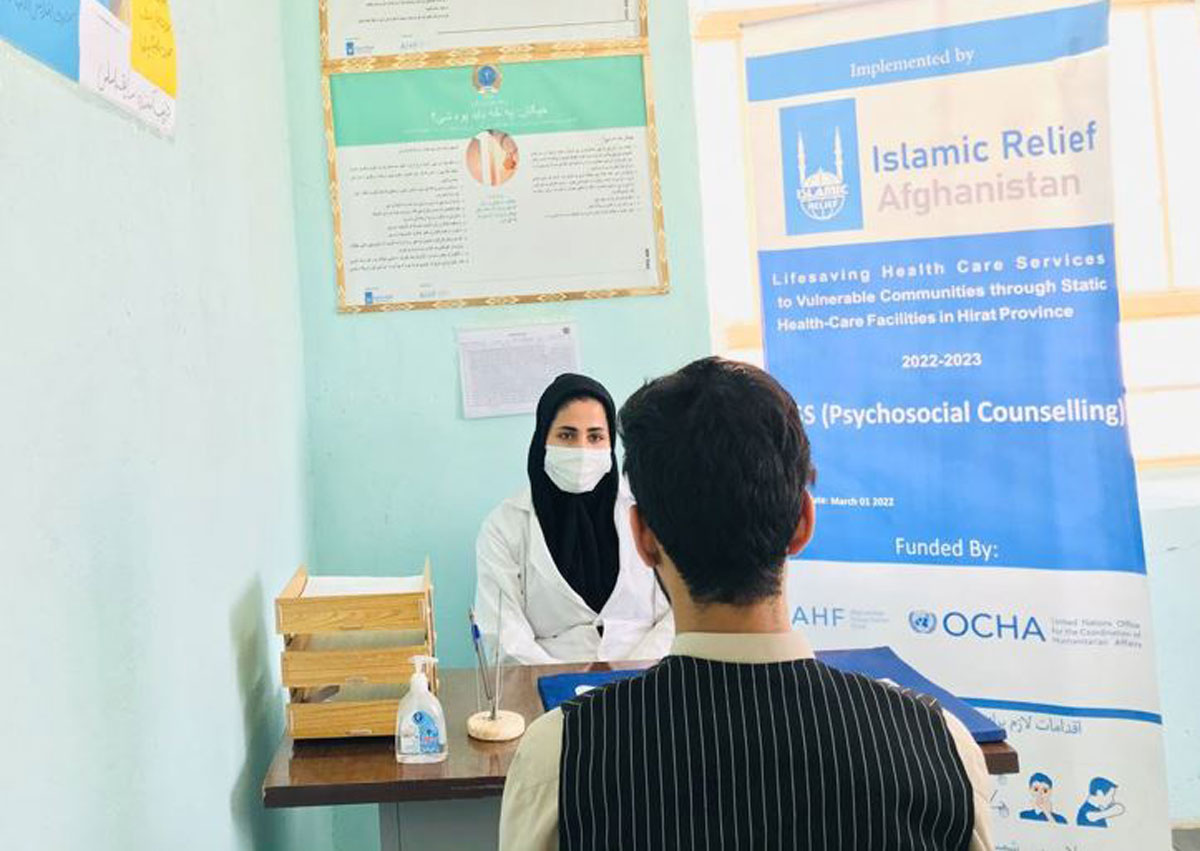
“I can’t believe what I’m seeing on a daily basis. Almost all the people who come to our temporary medical tents in the villages are showing signs of mental shock. You can see the fear and disturbance on their faces. They come to us already tired and crestfallen. Women and children are the most affected.”
Saeyqa Aslami, a psychosocial counsellor for Islamic Relief in Herat