
A serious escalation in the Middle East in early October saw an unprecedented bombardment of Gaza. By the end of the year, around 20,000 Palestinians had been killed and thousands more were injured. Many were women and children. As the violence extended into 2024, many more would lose their lives.
For the first two weeks of the crisis, no humanitarian aid was allowed to enter Gaza, pushing hospitals beyond the brink of collapse and leaving families engaged in gruelling daily searches for water, electricity and food. When supplies did arrive, the quantities were nowhere near enough to meet the huge needs of affected people.
Israeli authorities ordered more than 1 million people to evacuate to the south of the Gaza Strip, prompting mass displacement. Despite promises of safety, bombs have continued to fall on southern Gaza, hitting hospitals, mosques and camps for displaced people. Some 1.9 million people became displaced in search of safety.
Normal life in Gaza – already extremely challenging under a 16-year blockade – effectively came to an end. Simple, everyday tasks required constant consideration and adaptation as families try to manage increasingly dwindling resources.
Prior to the latest escalation, the humanitarian situation was already desperate, and worsened by an earlier escalation in May that spanned 11 terrifying days.
Livelihoods were devastated. Bombing and a severe fuel shortage forced many bakeries and shops to close, while farmers, water vendors and others were unable to transport their goods to market or make deliveries.
Unshakeable commitment
Islamic Relief staff and partners in Gaza endured unspeakable hardship. Every day was a struggle to keep themselves and their families safe.
With the vast majority of our staff displaced and the situation extremely dangerous, we suspended the majority of our regular programming in Gaza at the outbreak of the escalation.
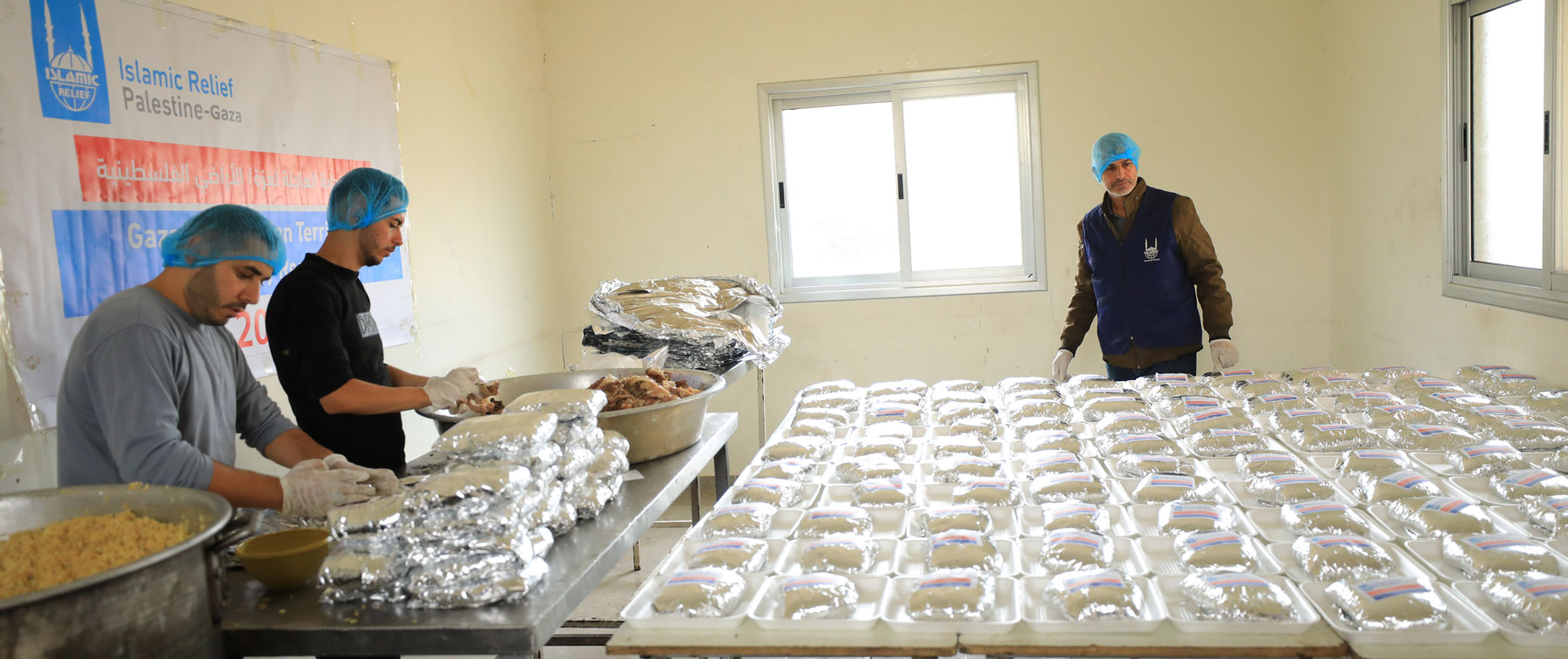
Our incredibly dedicated staff and partners remained committed to supporting vulnerable people in Gaza wherever and whenever it was safe to do so. During 2023 alone, we helped to feed thousands of displaced people with warm meals, food parcels and vouchers, as well as fresh vegetables, which we bought directly from farmers to help boost their income.
We distributed more than 2 million medical items to hospitals struggling to cope with the influx of wounded patients and provided thousands of people with water. We also staged games and activities for children in one shelter to help offer some distraction and reprieve at an incredibly distressing time.
While escalations are frighteningly common in Gaza, the crisis was unlike any Islamic Relief has ever seen in our almost 30 years of work in the Occupied Palestinian Territory. We urged all parties to agree to an immediate ceasefire, and reconfirmed our commitment to the people of Palestine, with whom we continue to stand.
CEASFEFIRE NOW
Islamic Relief called for an immediate ceasefire and for international law to be upheld by all parties.
We remained determined to see a lasting peace that allows all Palestinians and Israelis to live in safety and dignity with their fundamental human rights upheld.
Islamic Relief was clear that this will not be possible until the root causes of the crisis are addressed and there is an end to the injustice and inequality at the heart of the Israeli occupation, and the blockade of Gaza that accompanies it.
We urged the international community to work towards a just and lasting peace agreement.
Chronicling the crisis
From the beginning of the latest crisis, one Islamic Relief staff member in Gaza has been sharing his experiences through blogs. Enduring bombings, internet blackouts and displacement, he has remained committed to telling his family’s story – which is the story of so many in Gaza.
Our colleague, whose contributions we’ve anonymised to protect his safety and security, has written more than blogs describing his daily life, hopes and fears. All of which are available to read in full here.
3H7A2051
Islamic Relief staff prepare ready to eat meals to distribute to vulnerable people in Gaza