
Millions are enduring acute hunger in the Horn of Africa as five successive failed rainy seasons led to the region’s worst drought in 70 years. Climate change, conflict and rising food prices have exacerbated the situation, leaving more than 36 million people across Ethiopia, Kenya, and Somalia in need of aid.
Harvest after harvest has failed, and millions of livestock have perished. Livelihoods have been left in ruins, while millions of children are malnourished.
Water shortages have pushed an unprecedented number of families from their homes in search of food, water and work. Families are forced to walk miles in scorching heat to reach camps where they can receive aid and many vulnerable people, including children and the elderly, die along the way. In Ethiopia and Somalia alone, some 2.3 million people have been internally displaced due to drought.
In 2023, flooding added to the woes of communities in Somalia, Ethiopia and Kenya, affecting more than 2.8 million people across the region. Hundreds of thousands have been displaced while flood-induced damage to livestock and disruption to markets may lead to more hunger.
Supporting resilience and preparedness
Islamic Relief provided emergency relief to those affected by drought, flooding and conflict in East Africa. At the same time, we implemented development programmes to best meet the long-term needs of communities.
We improved water supplies by repairing old and damaged boreholes as well as drilled new ones, repairing traditional community water storage pools, and trucking in clean water to communities. We also ran programmes to train mothers and other community members to identify signs of malnutrition in children, and supporting nutrition clinics to offer treatment. During the 2020-23 drought response period, Islamic Relief supported 1.8 million in East Africa through our humanitarian and development programmes.
The increasing frequency of extreme weather events makes this work increasingly vital as responding to predictable climate-related disasters once they’ve already happened is not enough. Islamic Relief is calling for a renewed commitment to medium and long-term initiatives to protect fragile livelihoods and prevent the collapse of local food systems.
In May, CEO Waseem Ahmad spoke at the UN Horn of Africa Pledging Conference, announcing Islamic Relief’s £15 million pledge – more than some of the world’s richest governments have committed so far – and calling on world leaders to step up their response to help those most affected by climate change. This pledge will support communities in the Horn of Africa to recover from and improve resilience to future climate change induced disasters.
RS310078_2023.01.11_DREEHA_Photos97
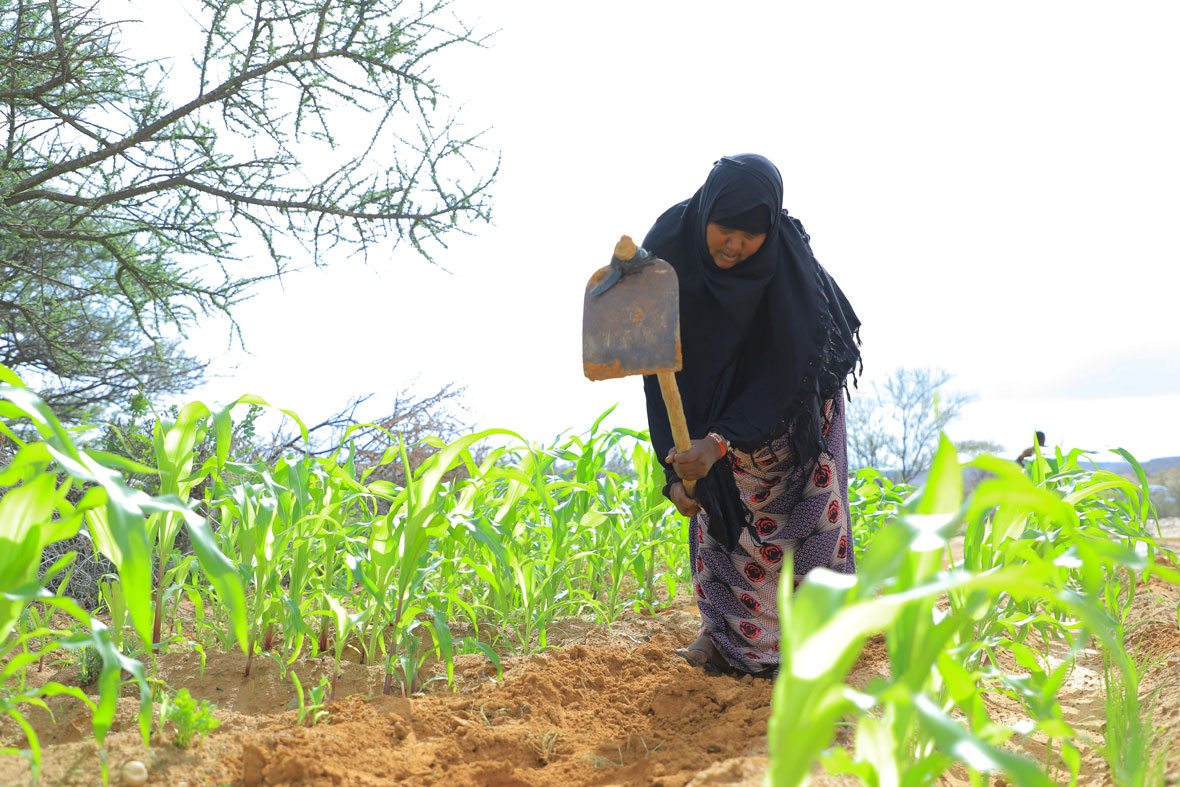
Warsan tills the land in Gabigaduud, eastern Somalia, as part of an integrated project to help drought-affected families across the region addresses food, water and livelihoods needs
Ethiopia—see-note
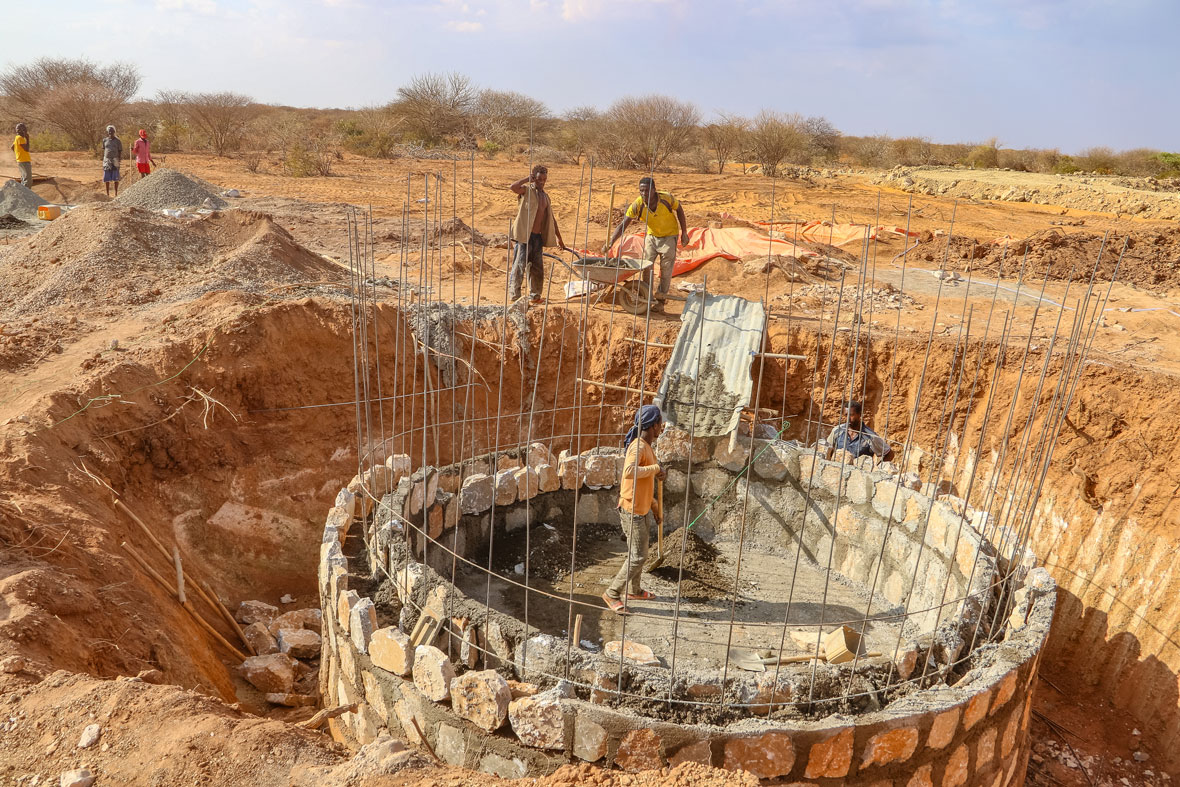
The building of a dam in Hargalle, Ethiopia as part of a project to support 3,000 farming families affected by drought

Mohamed, an imam in Kenya’s Marsabit county, and his family were among 1,000 households that received six months of unconditional cash transfers from Islamic Relief, among other support, in 2023.
“It is a sad reality that many of my neighbours here in Ogomdi village are surviving on roots from certain trees found in the wilderness because there is no food or water. We had a well in our village, but it has dried up because of the drought. I have lost all my livestock and people in all economic sectors have been affected. Shops have been closed but those most affected are the pastoralists. I have been left with only 10 goats, yet I once had 50 cows, 20 camels and 40 goats.
“Life has really changed. In the past, we would sell our livestock whenever we needed some money for food or school fees for our children. Now, we have nothing left. The children attending higher levels of education are now at home because we cannot afford it. We do not eat the foods we used to eat in the past. Our children are struggling with these changes.
“With monthly payments from Islamic Relief, I have been able to buy food and pay some school fees for my children. We are thankful for the all-round support. We received money and water was also delivered. There is no organisation that has given us support in the way Islamic Relief has done.”