
Islamic Relief is working to build integrated sustainable development programmes that meet multiple needs in the communities we serve. Our health work often goes hand in hand with education, while a programme aimed at tackling hunger could support improvements to livelihoods, health and water and sanitation. An integrated approach allows us to better address the root causes of challenges communities are facing.
In Niger, Islamic Relief has been empowering vulnerable families through our Graduating Ultra Poor Orphan Households in Niamey out of Poverty (GOMNI) project.
The project aimed to address the key drivers of poverty among a community in Niger’s capital, Niamey. The city’s population is on the rise as people displaced by climate change and conflict, as well as refugees, seek work in the capital. Poverty is prevalent, with 60 per cent of inhabitants classed as ‘poor’ or ‘ultra-poor’, and many are reliant on piece work and petty trading to earn a living.
In this context, widowed women and their families are particularly struggling to get enough food to eat, access basic services and earn enough to sustain themselves. Building on the work of Islamic Relief’s ongoing Orphan Sponsorship Programme, which supports more than 3,500 children in Niger, we identified families that would most benefit from this project.
Running from 2020 -2023, GOMNI improved the living conditions of 600 women and their families, providing a helping hand to take their first steps out of poverty and build sustainable livelihoods. Along with improving access to food and services, the project sought to promote financial literacy and provide more diverse livelihood options for the women involved.
Forming a plan to address families’ needs
Islamic Relief partnered with the local municipality, which is known for its expertise in community mobilisation and market linkages to deliver the GOMNI project most effectively. To avoid overlap, we also engaged in cluster meetings with government bodies and international organisations. The goal was to provide:
- Immediate support: Six months of cash transfers, totalling XOF 195,000 (£255.71) per family, to 600 families, enabling them to meet their urgent needs while the women participating in the project prepared to launch small businesses.
- Long-term empowerment: Intensive training in entrepreneurship and financial literacy for the women, empowering them to develop and implement viable business plans.
What support did Islamic Relief offer?
Food: All 600 participants took part in training sessions on nutrition, run by Islamic Relief and Niger’s Ministry of Health. Women began implementing the skills they learned at home and adopting healthier eating habits. They also used some of the initial cash transfers to buy food for their families. The women’s families were also included in our seasonal Ramadan and qurbani food distributions.
WASH: Water, sanitation and hygiene specialists from Niamey municipality delivered training sessions to the 600 participants. The sessions were particularly valuable to women living in areas where several families share toilets and wash spaces, as well as those living close to marketplaces who can find maintaining hygiene challenging.
Livelihoods: Empowering women to start and grow their own businesses was a key aim of the GOMNI project. To this end, experts from the Niger Ministry of Entrepreneurship, Niger Chamber of Commerce, and Islamic Relief conducted training in the local language to empower women to develop and carry out their business plans. All 600 participants have set up a small business since receiving the training.
The continued success of these businesses was supported by regular home visits by community members to monitor the women’s progress. In addition to this, the project oversaw the establishment of 24 Village Savings and Loans Associations (VSLAs) to provide the women with a useful and affordable financial service. The VSLAs are now fully operational, granting all 600 participants access to loans to cover economic activities, such as their children’s health or food needs.
Social issues: Through the GOMNI project, Islamic Relief also sought to improve knowledge and change attitudes and practices around child protection and gender-based violence. We trained two local faith leaders – both of whom were women – to conduct regular awareness sessions, explaining what religion teaches on these issues. Surveys carried out in early 2023 showed all 600 women were aware of child protection and GBV, while 94 per cent reported increased awareness that faith teachings do not not support harmful practises related to these topics.
What types of businesses did the women start?
All 600 women who participated in the GOMNI project successfully started or expanded their own small business.
Some of their activities included:
- Selling fruit
- Tailoring and clothes repair
- Selling hot food
- Selling mobile phone accessories
- Selling clothes
- Selling soft drinks
What was the impact on the community?
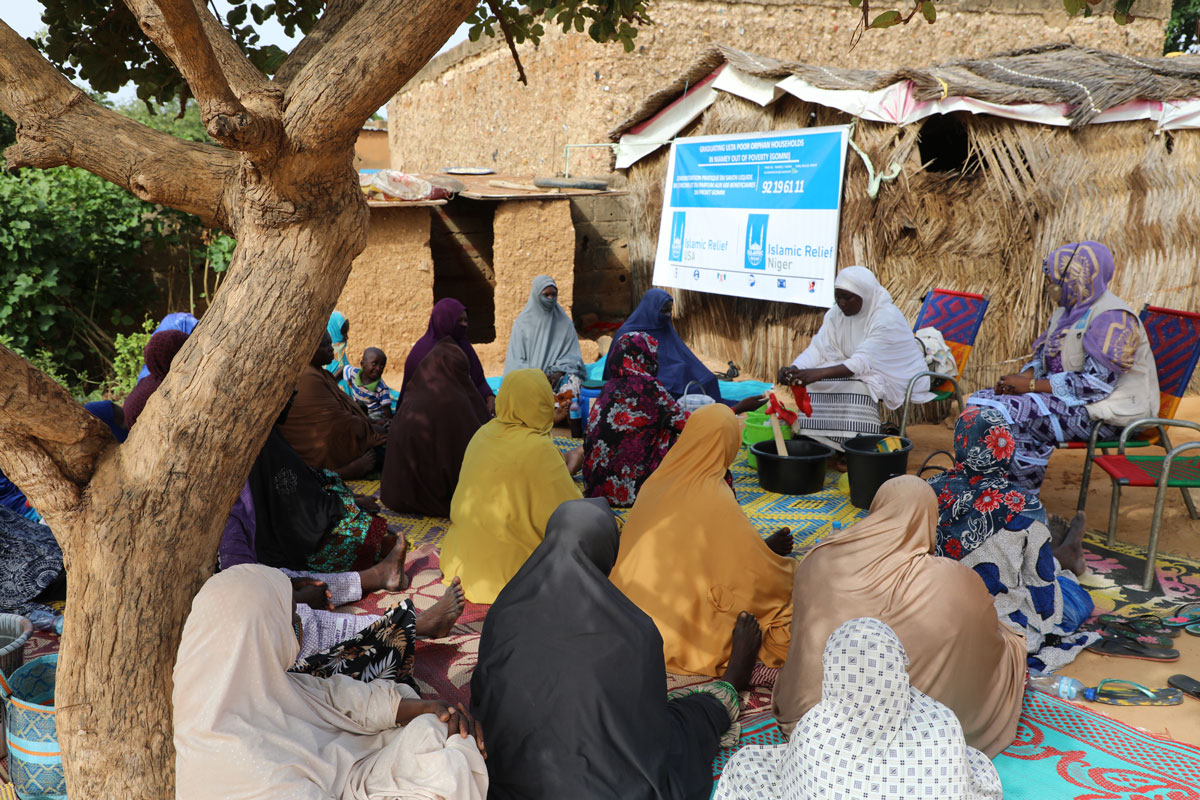
This life-changing project had a huge impact on the 600 women directly involved, all of whom were responsible for providing for orphaned children. However, its impact has been, and will continue to be, felt by their families and the wider community. Through the VSLAs, the women have become more confident dealing with financial matters, with 98 per cent of participants interviewed reporting increased involvement in financial decision-making, and 87 per cent noting an increased involvement in major household expenditures.
Responses to our surveys show that the knowledge and confidence gained through GOMNI is having an impact on women’s ability and willingness to participate in decision-making in their communities and homes. This includes on harmful practices, with 89 per cent of participants noting an increase in their participation in decisions related to child education and marriage.
600 WOMEN
98% INVOLVED IN FINANCIAL DECISION-MAKING
87% INVOLVED IN MAJOR HOUSEHOLD SPENDING DECISIONS
89% INVOLVED IN DECISIONS ON CHILD EDUCATION AND MARRIAGE
‘THE GOMNI PROJECT IS THE ELECTRICITY THAT PULLED ME OUT OF DARKNESS!’
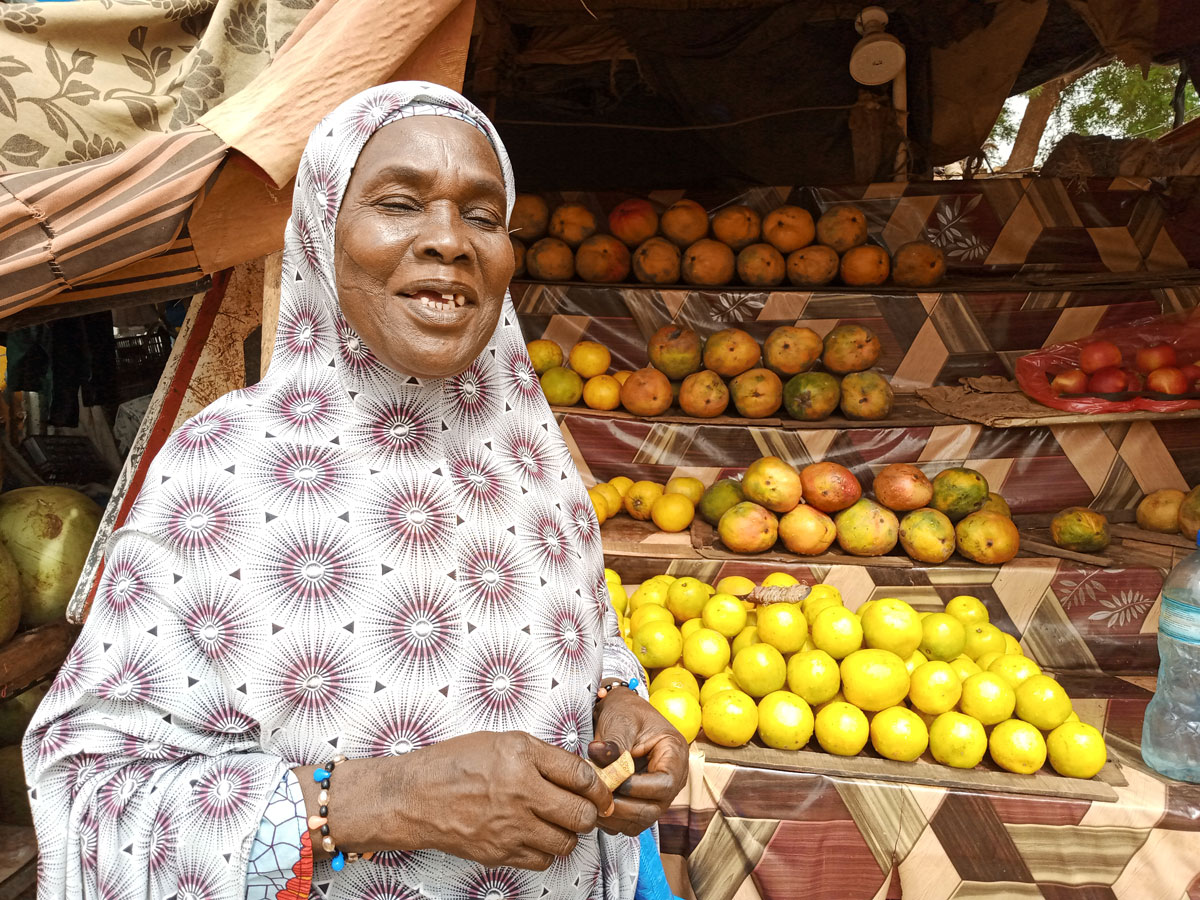
Aicha, a widowed mother of two, began selling fruit from a small stall after the death of her husband. While street vending is generally a male domain in Niger, Aicha had to earn an income to feed her children.
Aicha struggled to earn enough to cover her children’s basic needs, and the family could rarely afford to eat three meals per day. Support from Islamic Relief’s Orphan Sponsorship Programme helped ease the load somewhat, but the family’s lives changed dramatically after Aicha became involved in the GOMNI project.
“When I received the first cash transfer, I decided to scale-up my business. With the extra cash, I was able to buy bigger quantities of fruit. Depending on the season, I sell oranges, mangoes, bananas, and watermelons. I manage to sell my stock and make a weekly profit,” the 62-year-old said.
“I am very proud of myself. I have my own stand in front of my house and all my neighbours support me by buying fruit. When I received the second cash transfer from GOMNI, I made my shop bigger and nicer.
“Islamic Relief’s support has been very positive in our lives. Our living conditions have been upgraded and I feel much more confident today. I am not weighed down by doubt like I was before joining the GOMNI project. GOMNI is like the electricity that pulls me out of the darkness!”
“I was ashamed and didn’t want people to look at me [selling things in the street]. But I also realised that no one else could help me feed my children after my husband died, and I do not want to depend on people for my survival,” she said.
With support from Islamic Relief’s GOMNI project, Hadiza bought the necessary materials to start selling food. Later, financial support and skills training from the project helped the 45-year-old to boost her earnings.
“I realised that I could now become a professional… I told my children that our life was about to change because of this project,” Hadiza said, adding that her confidence has grown along with her income.
“When I received financial support from Islamic Relief, I became free of all my worries. I know I will succeed and be able to take care of my children. There is no one helping widows like Islamic Relief in Niger. GOMNI is like our father.”