
Climate change is one of the biggest threats facing humanity today. It is destroying lives and livelihoods, driving displacement, and putting a huge strain on nation’s economies. Increasingly, it is the poorest and most vulnerable communities that are bearing the brunt of the negative impacts of climate change – despite having contributed least to causing it..
Islamic Relief is committed to supporting communities to adapt and build resilience to climate change and mitigate its negative impacts.
Flood fallout:
2016: $71 million damage in Bima city
2021: 400 houses damaged and swathes
of agricultural land destroyed by five bouts of flooding in Dompu.
Climate resilience through conscious farming practices in Indonesia
In Indonesia’s NTB province, poverty and the condition of the land has driven many in Bima and Dompu districts to encroach on forest land in an attempt to grow crops. This, combined with illegal logging, has led to increased run off during rainy season, resulting in more frequent flash flooding. While in dry season, hotter temperatures and drought frequently cause harvests to fail.
Islamic Relief launched the Building Community Resilience to Climate Change (BUCRACCE) project to support 20 communities adopt sustainable agricultural practises and build their resilience to climate-induced shocks.
Among the steps we took towards the first goal were delivering training on sustainable agroforestry, providing small grants to farmers, and distributing high quality seeds suited to the soil.
To support climate resilience, we trained teams of community members on emergency response, helped develop action plans, and selected ‘champions’ to reduce disaster risk in upstream and downstream areas. We also joined forces with police and village and district governments to prevent illegal logging and worked with the community to tackle gender inequality and abuse.
The project, which concluded in 2023, saw more than 460 hectares of land planted with trees to help repair damaged forest area, more than 1,000 people receive training on sustainable agroforestry and 20 villages issuing regulations on forest protection and rehabilitation. In addition, more than 100 community-based forest rangers now actively conduct patrols.
Islamic Relief’s
landmark
STRIDE project
produced a major
research paper
on localisation
and climate
adaptation in
2023
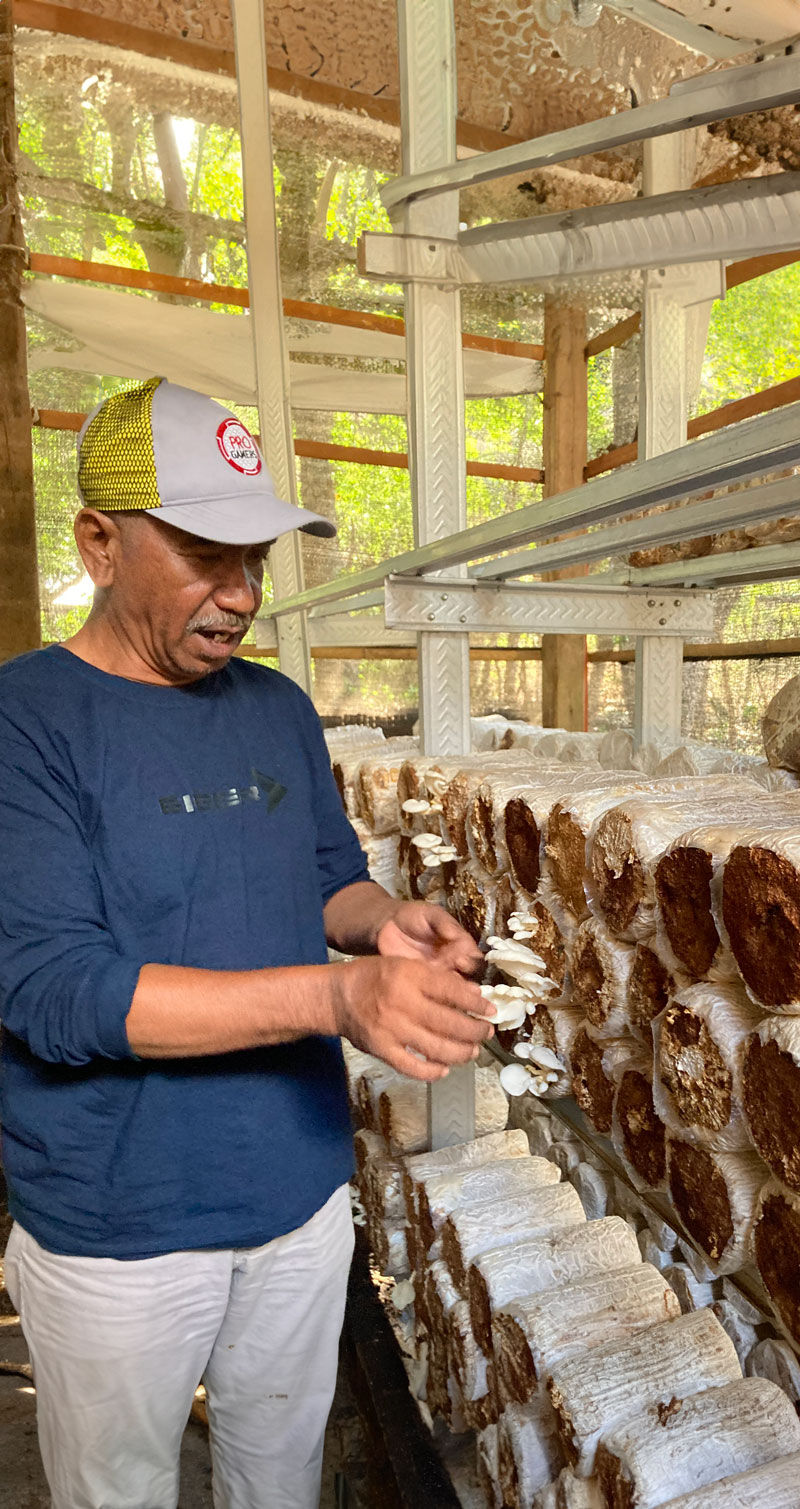
Azis, 52, is a farmer living in Bima. He is the head of Ule village and leader of the Songgela Jaya Forest Farmers Cooperative.
Most of the members of the group were earning a living from maize cultivation and, though Azis felt responsible for encouraging members to switch to less harmful farming techniques, he struggled to make change.
After joining the BUCRACCE project, Azis and the cooperative’s other members are experiencing higher incomes through new business activities, particularly oyster mushroom farming. They’ve also successfully cultivated herbs and spices.
Azis says the project has affected his life in many ways, and proven that there are other ways to earn a living.
“I used to do nothing when coming home from the forest, but now, there are things to tend to in my yard. I have many plants to take care of,” says Azis, who is growing ginger in his garden.
Campaigning for commitments to adaptation
In 2023, Islamic Relief maintained our leading role in negotiations towards an UN-led Global Goal on Adaptation. We were registered observers to the regular meeting of the UNFCCC Subsidiary Bodies in June, and online at its Conference of Parties – COP28 – in November. Our efforts have been bolstered by uniting with 2,000 other organisations under the Climate Action Network (CAN).
During COP, we spoke on behalf of CAN in workshops to develop the Global Goal with the United Nations Adaptation Committee as well as the Egyptian and United Arab Emirates presidencies of COP28.
Throughout 2023 we:
- Met with government delegates to discuss adaptation
- Drafted multiple articles for the influential daily ECO newsletter, published during COP
- Presented our case for adaptation at the UNFCCC Interfaith Liaison Committee
Climate-Strike-1
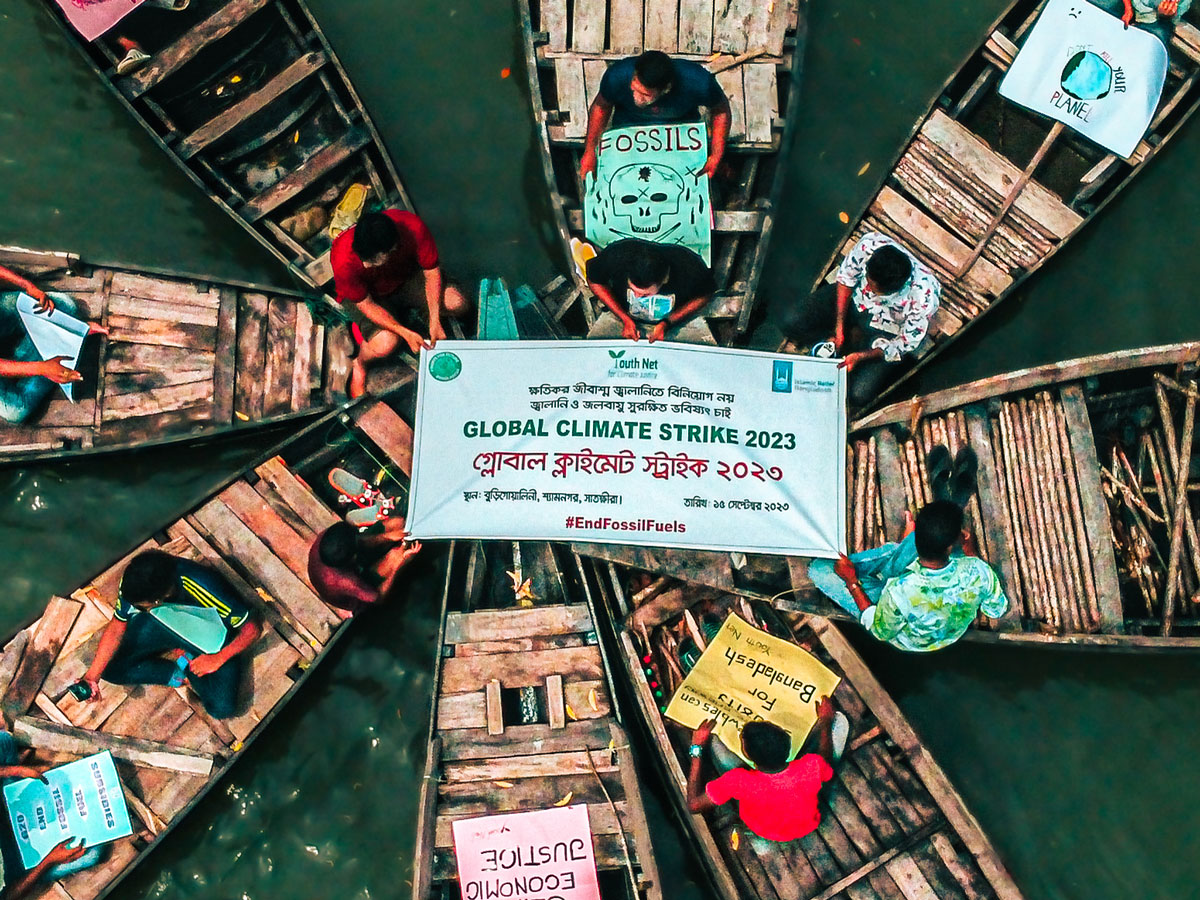
In September, youth volunteers in the southern coastal regions of Bangladesh carried out demonstrations as part of the Global Climate Strike. These included ‘boat chains’ with banners and placards calling on governments to reduce global carbon emissions and holding them accountable for climate action.
Supporting climate-vulnerable communities in Bangladesh
Bangladesh is one of the most climate-vulnerable countries on Earth, with communities in its southwest coastal belt particularly at risk from hazards such as salinity intrusion, cyclones, river erosion and tidal surges. The region’s agricultural sector – vital for so many livelihoods – is being significantly impacted.
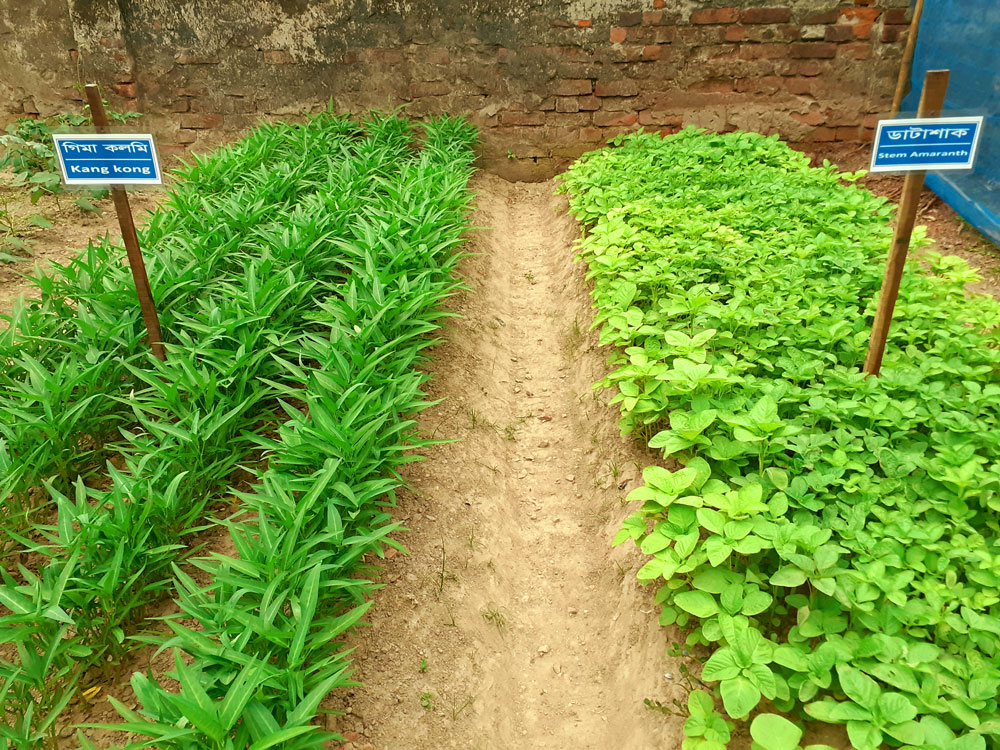
In response, Islamic Relief launched the Empowering Marginalised Communities of Bangladesh towards Achieving Agenda 2030 project. It actively promotes the use of locally adapted seeds that can cope with the region’s changing environmental climate. A total of 3,200 participants have received training in planting kitchen gardens, and support to mobilise communities to increase agricultural production while adapting to climate change. The project also created employment opportunities for 700 families from Dalit communities who face exclusion and poor access to services. Through the project they received training in income generating activities and cash grants.
20220610_085844
Bamboo is boosting community resilience in the Philippines
Persistent and widespread obstacles have left millions of people across the Philippines without access to clean water and appropriate sanitation services. For people living in Maguindanao Del Sur province, the situation is further complicated by conflict. Islamic Relief launched our Community Resilience Through
Build back better
Islamic Relief adopts a ‘build back better’ approach when responding to emergencies, many of which are tied to climate change.
This approach sets out recovery, rehabilitation and reconstruction phases to boost the resilience of communities to similar disasters and shocks in the future.
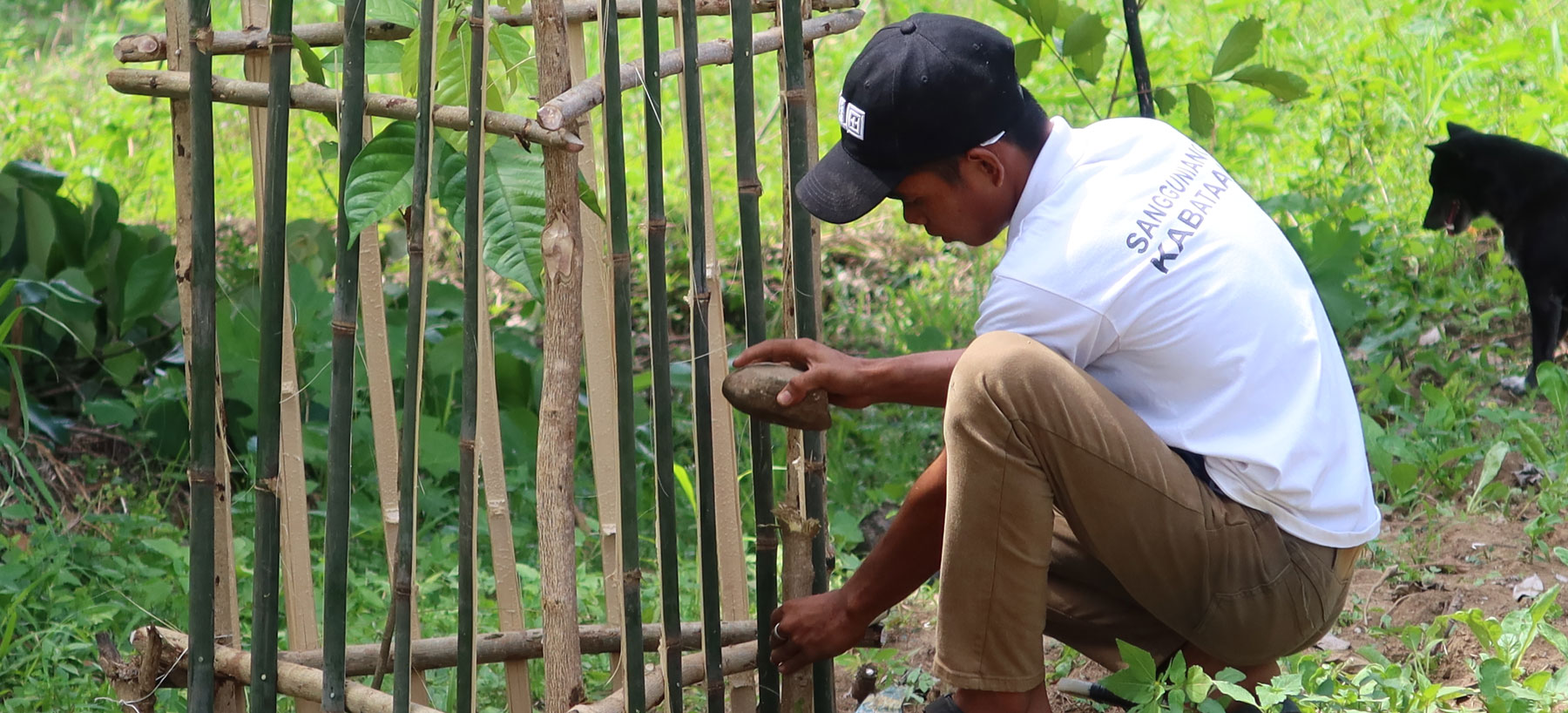
Ecological Integrity (CORE) project to improve access to water and empower communities to build climate resilience. Working in Shariff Aguak and Datu Hoffer municipalities, we ran community awareness sessions on climate change and bamboo solutions to combat flooding, established two bamboo nursery sites and provided grants to two youth groups to empower the next generation of climate action leaders. To improve water access, Islamic Relief constructed a water system that benefitted almost 600 families across the two municipalities, constructed a water refilling station that served 40 farmers and more than 100 families.
This project, which concluded in 2023, implemented many more initiatives. In total more than 10,400 were supported by its work.
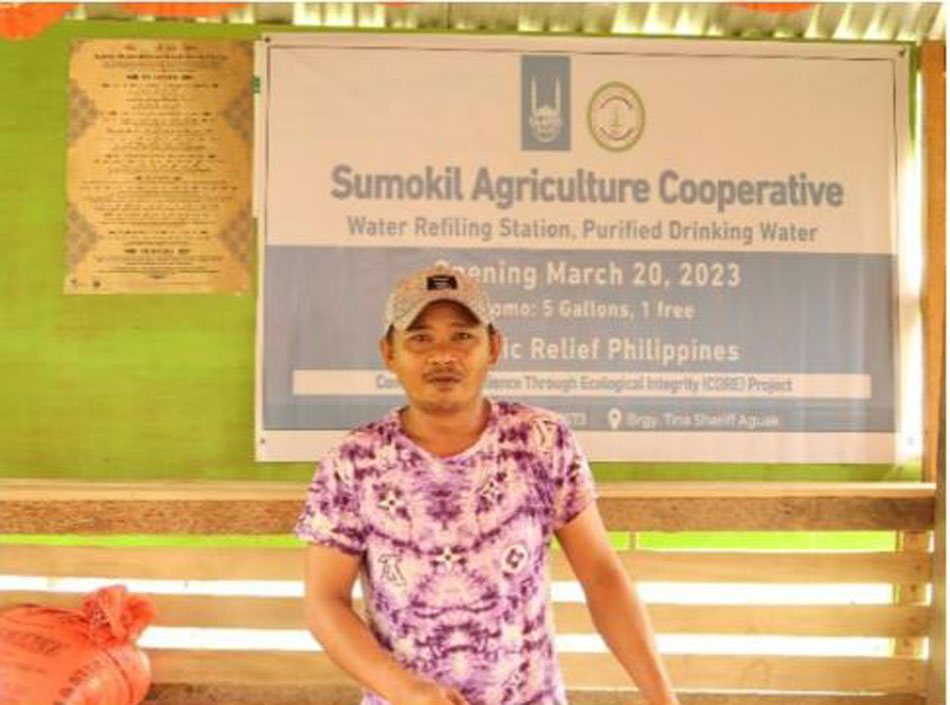
image71
Dalie, 42, works as part of a farming collective in Shariff Aguak, where he tends to rice fields, coconut plantations and various indigenous vegetables. He is president of the Sumokil Agriculture Cooperative, a significant organisation within the local community and one that benefitted from the water refilling station constructed by Islamic Relief.
“Islamic Relief engaged in discussions with our community to identify what we most needed and it became clear that safe and clean water was the biggest necessity. Given that our area is prone to flooding, our water source – which before the project was a deep well – can’t be used during rainy season, so Islamic Relief selected our existing cooperative to oversee and manage the refilling station project to address this issue.
“With the positive impact of the refilling station, training and seminars, we believe that our community can progress and thrive even more in the future.”
RS296981_IMG_0941
Young people plant trees to boost their communities’ resilience to climate change